
How Contributing to 401(k) Affects Take-Home Pay
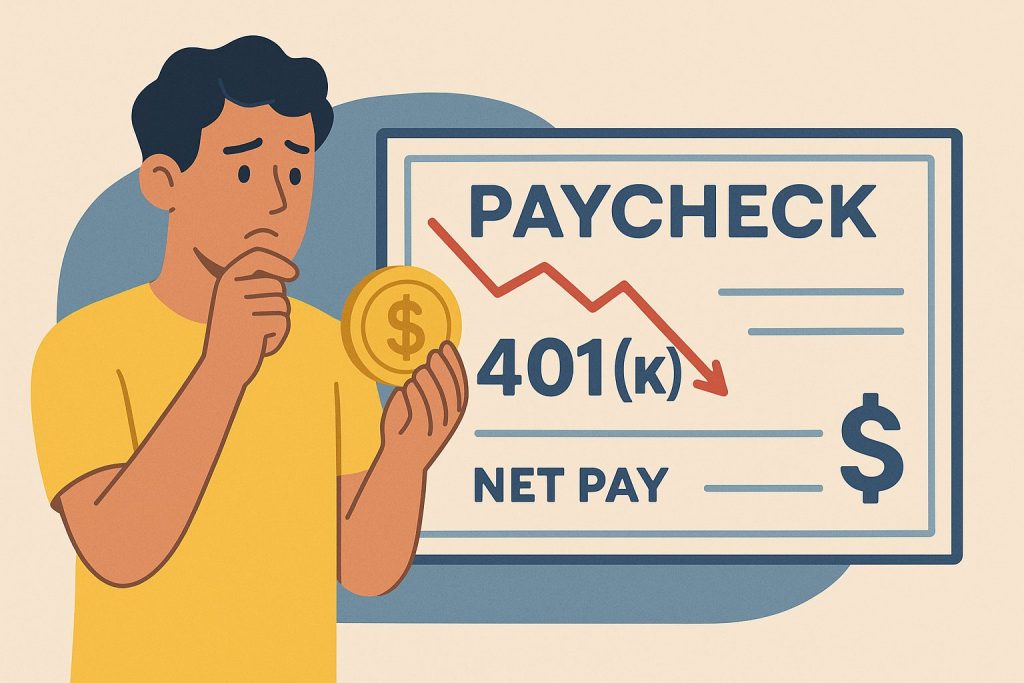
Just by contributing to your 401(k), you could significantly alter your take-home pay. While adding to your retirement savings is a smart strategy for the future, it typically results in reduced immediate income. Understanding how these contributions impact your paycheck is imperative for managing your finances. This post will probe into the mechanics of 401(k) deductions, tax implications, and how to effectively balance retirement planning with your current financial needs, so you can make informed decisions that best suit your lifestyle.
Key Takeaways:
- Contributing to a 401(k) reduces your taxable income, which can lower your overall tax liability and may lead to increased tax refunds.
- Higher contribution rates result in lower take-home pay in the short term, but they promote long-term retirement savings and financial stability.
- Employers may offer matching contributions, effectively increasing your retirement savings without additional cost to you, further impacting your overall take-home pay strategy.
The Mechanics of 401(k) Contributions
Understanding how 401(k) contributions work is crucial for managing your finances and optimizing your retirement savings. Contributions to a 401(k) plan are typically made through payroll deductions, meaning a portion of your salary is automatically withheld and deposited into your retirement account before taxes are calculated on your remaining income. This tax-deferred growth allows your savings to compound over time, providing substantial benefits as you prepare for retirement.
How Contributions Are Withheld From Paychecks
Employers typically offer a streamlined process for contributing to your 401(k); once you enroll, the agreed-upon percentage of your salary is deducted directly from your paycheck. This automatic withholding not only simplifies the saving process but also ensures you remain on track with your retirement goals. For example, if you choose to contribute 5% of your $60,000 salary, $3,000 annually will be allotted to your 401(k) before taxes are applied.
The Role of Employer Matching Programs
Many employers enhance your 401(k) contributions through matching programs, which can significantly increase your overall savings. Typically, an employer will match a portion of your contributions, often up to a certain percentage of your salary. If your employer matches up to 50% of your contributions, for example, contributing $4,000 a year could result in an additional $2,000 to your retirement savings, maximizing your investment opportunities. Expanding on employer matching, this benefit can be a game-changer for your retirement strategy. If your company offers a match of 50% on contributions up to 6% of your salary, contributing the full amount allows you to receive additional funds that require no extra effort or risk on your part. Over time, this employer contribution not only boosts your savings but also accelerates the compounding process, potentially resulting in thousands of dollars more for you to enjoy during retirement. Taking full advantage of these matching programs can make a substantial impact on your long-term financial well-being.
Tax Implications of 401(k) Contributions
Your 401(k) contributions can significantly impact your tax situation, shaping how much you take home each payday. When you contribute to a traditional 401(k), your contributions are typically made with pre-tax dollars. This means you can effectively lower your taxable income in the year you contribute. To see how your contributions might affect your paycheck, you can use this handy Calculator: How 401(k) Contributions Affect Your Paycheck.
Immediate Tax Benefits and Deferred Taxes
Contributing to a traditional 401(k) offers immediate tax benefits, as your contributions reduce your taxable income, leading to a lower tax bill in the current year. For instance, if you earn $60,000 and contribute $5,000 to your 401(k), only $55,000 will be subject to income tax. The taxes on your invested funds are deferred until you withdraw them in retirement, potentially when you’re in a lower tax bracket.
The Impact on Your Tax Bracket
Your contributions can influence your tax bracket, potentially allowing you to keep more of your income now. By lowering your taxable income through 401(k) contributions, you may avoid moving into a higher tax bracket as your annual income increases. This effectively decreases the amount of tax you owe and can enhance your overall financial strategy.
Let’s say you’re close to the threshold of a higher tax bracket at $85,000, but after a $5,000 contribution to your 401(k), your taxable income drops to $80,000. By doing this, you maintain a lower tax rate on a significant portion of your income. This strategy can add up over the years, translating into thousands saved in taxes as you build your retirement savings, all while allowing your investments to grow tax-deferred until withdrawal.
Take-Home Pay Discrepancies
Understanding how your 401(k) contributions impact your take-home pay reveals the nuances of your paycheck. The amount you contribute reduces your earnings, meaning your net income may show a noticeable difference month-to-month. Even a small increase in your contribution, say from 5% to 7%, can lead to a significant decline in disposable income that can influence your budgeting decisions and financial priorities.
Calculating Changes in Net Income
To determine how a 401(k) contribution alters your net income, subtract your pre-tax contribution from your gross income. For instance, if you earn $5,000 monthly and contribute 5%, your contribution is $250, bringing your taxable income down to $4,750. This adjustment also impacts your tax bracket, which can mitigate the reduction in take-home pay through tax savings.
Balancing Short-Term Needs with Long-Term Savings
You face a constant challenge between meeting immediate financial demands and planning for future needs through your 401(k). Allocating funds to retirement can feel less urgent than paying bills or enjoying life’s pleasures, but consistently prioritizing your contributions helps build wealth over time. Reassessing your spending habits may uncover opportunities to save more effectively for retirement without sacrificing current living standards.
Finding equilibrium between your short-term financial needs and long-term savings performance requires discipline and awareness. If you habitually evaluate your monthly expenses and prioritize savings, you’ll be better positioned to identify areas where you can cut back without compromising your lifestyle. For example, consider minimizing discretionary spending such as dining out or subscriptions, allowing those savings to instead bolster your retirement fund. This strategic approach not only helps secure your financial future but also empowers you to enjoy your present life responsibly.
Discover more about retirement contributions: tax advantage to enhance your knowledge.
Evaluating Your Contribution Strategy
Assessing your contribution strategy is a vital step toward achieving optimal long-term benefits from your 401(k). It involves examining your current contribution rate relative to your overall financial goals, ensuring that you are not only maximizing employer matching contributions but also aligning your retirement savings with your lifestyle expectations. A well-structured approach helps you strike a balance between saving for the future and enjoying the present.
Setting Realistic Contribution Goals
Establishing achievable contribution goals can set the tone for your financial success. Start by evaluating your monthly budget and identifying how much you can comfortably dedicate to your 401(k) without compromising your imperative expenses. Aim for at least a 15% contribution, including employer matches, to build a substantial retirement fund over time.
The Importance of Regularly Reviewing Your Plan
Regularly reviewing your 401(k) plan is imperative for staying on track with your retirement goals. This reflection allows you to make necessary adjustments to your contribution rate as your financial situation evolves, such as changes in income or life circumstances. Additionally, monitoring investment performance ensures that your portfolio remains aligned with your risk tolerance and growth objectives.
By conducting annual or semi-annual reviews, you can identify trends and opportunities in your investment funds. For instance, if a particular fund has consistently underperformed, you might consider reallocating your contributions to a more promising option. Life changes, such as salary increases or family obligations, also call for a reassessment of your contribution levels. Making these adjustments proactively can help ensure that you’re taking full advantage of compounding interest and employer matching contributions, ultimately leading to a more secure financial future.
Discover more about 401(k) matching and your to enhance your knowledge.
Real-World Scenarios: A Breakdown of Contribution Effects
Exploring how 401(k) contributions impact your take-home pay can be enlightening. You might be surprised by the difference even a small percentage can make. For instance, a $50,000 annual salary with a 5% contribution could decrease your take-home pay by around $208 monthly, but it significantly boosts your retirement savings. To examine how various contribution levels affect your paycheck, consider using a 401k Contribution Calculator.
Different Income Levels and Their 401(k) Impact
Your income level significantly influences how much you might want to contribute to your 401(k). For example, higher earners can afford to contribute a larger percentage without feeling a pinch in their monthly budget. Conversely, if you’re earning closer to minimum wage, even a small contribution can feel substantial, affecting your overall monthly spending.
Age and Financial Goals: Tailoring Contributions
At different life stages, you might face differing financial priorities, and your 401(k) contributions should reflect that. Younger workers often prioritize cash flow, leading to modest contributions, while those nearing retirement usually ramp up their savings to maximize retirement funds. Tailoring your contributions according to your age can help in achieving a stable financial future.
If you’re in your 30s or 40s, your financial trajectory likely includes plans for a family, home ownership, or other significant expenditures. With these factors in mind, you might choose to contribute just enough to take advantage of employer matching while focusing on short-term needs. On the other hand, approaching retirement—let’s say in your 50s—you’d want to maximize your contributions to ensure a comfortable retirement. Strategically adjusting your 401(k) contributions based on your age and long-term financial goals allows for a balanced approach to savings versus spending.
Explore our 401(k) & retirement guide for how to understand the broader context.
Conclusion to: How Contributing to 401(k) Affects Take-Home Pay
Taking this into account, contributing to your 401(k) directly reduces your take-home pay, as the contributions are deducted before taxes are applied. While this may initially decrease your disposable income, these contributions can lead to significant long-term savings and investment growth for your retirement. Therefore, by prioritizing your 401(k), you’re making a vital investment in your future financial security, while also enjoying potential tax benefits that can enhance your overall financial strategy.
How does contributing to a 401(k) lower my take-home pay?
When you contribute to a 401(k), the amount you contribute is deducted from your gross income before taxes are applied. This means that your taxable income is reduced, which results in a lower amount of federal income tax taken out of your paycheck. However, because you’re contributing a portion of your income to retirement savings, your actual take-home pay will decrease as a result of this deduction. For example, if you earn $50,000 a year and contribute 5% ($2,500) to your 401(k), your taxable income is effectively decreased to $47,500, which can lower the overall taxes withheld but results in a lesser amount of cash received in hand.
Will contributing to a 401(k) impact my Social Security and Medicare contributions?
No, contributions to a 401(k) are not exempt from Social Security and Medicare taxes. These contributions reduce your taxable income for federal income tax purposes, but they do not affect your contributions to Social Security and Medicare, which are calculated based on your gross earnings. This means even with the contribution to your 401(k), you will continue to pay Social Security and Medicare taxes on your full salary. As a result, your eligibility for benefits from these programs remains intact and is based on your total earnings over your working years.
Can I adjust my 401(k) contributions to manage my take-home pay better?
Yes, you have the flexibility to adjust your 401(k) contributions as needed. If you find that contributing a certain percentage is affecting your take-home pay more than you would like, you can lower your contribution percentage. Most employers allow employees to change their contribution amounts at specific times, such as during open enrollment or any time during the year if it’s allowed by your plan. Keep in mind, however, that while lowering your contribution will increase your immediate take-home pay, it may also reduce your long-term savings for retirement. It’s important to balance your current financial needs with your future retirement goals when making these decisions.