
Why You Should Use More Than One Calculator
You may not realize it, but using more than one calculator can significantly improve your accuracy and efficiency in solving mathematical problems. Different calculators offer unique features and functions, allowing you to choose the best one for your specific needs, whether it’s basic arithmetic, scientific calculations, or advanced graphing. Relying solely on one tool might limit your capabilities and lead to miscalculations. By diversifying your resources, you can enhance your problem-solving skills and achieve more reliable results in your academic and professional pursuits.
Key Takeaways:
- Using multiple calculators can help cross-verify results, ensuring greater accuracy in calculations.
- Different calculators may offer unique features or functions suited for specific types of problems, enhancing efficiency.
- Diverse calculators can assist in understanding different approaches to problem-solving and promote critical thinking.
The Mathematical Versatility of Multiple Calculators
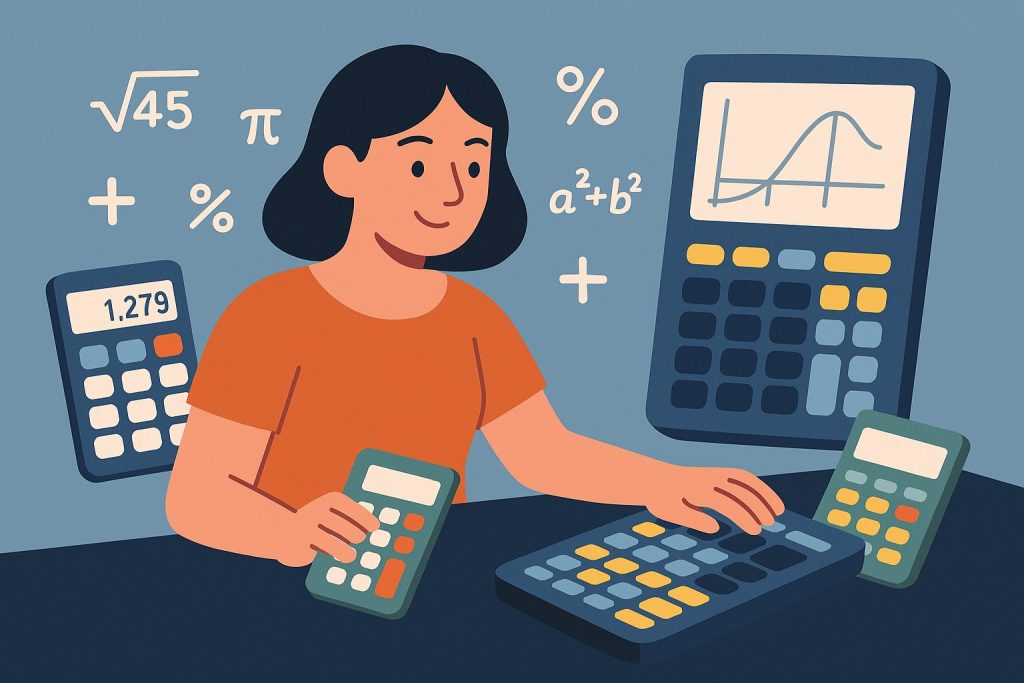
The capability to harness multiple calculators opens doors to a variety of mathematical applications, greatly enriching your problem-solving toolkit. By integrating various models, you can streamline complex computations, compare outcomes, and deepen your understanding of different mathematical principles. Each type of calculator is often designed with specific functionalities in mind, allowing you to approach tasks with enhanced creativity and focus. The resulting versatility can be a game-changer in both academic and professional settings.
Enhancing Precision with Specialized Tools
Specialized calculators, like graphing or scientific models, offer a level of precision and functionality that general calculators often lack. For example, when working on complex functions, a graphing calculator enables you to visualize data and identify trends, while a statistical calculator can conduct intricate analyses with ease. Utilizing these tools allows you to refine your calculations and achieve more accurate results.
Leveraging Different Functions for Varied Applications
Different calculators serve unique purposes, making them indispensable for a broad range of tasks. For instance, a financial calculator specializes in amortizations and investments, while a scientific calculator excels in trigonometry and logarithms. Having access to these varying functions means you’re not forced to stretch one device beyond its limits, ensuring that each calculation is optimized for its specific context. This tailored approach improves your overall efficiency and effectiveness in problem-solving.
The Cognitive Benefits of Using Diverse Calculators
Utilizing a range of calculators not only aids in achieving accurate results but also enhances cognitive processes. Engaging with different tools can foster greater mathematical understanding and adaptability. For insights on potential calculator over-reliance, check this response from Student: Why not use a calculator? Diverse calculators allow you to explore various mathematical strategies, influencing your approach to problem-solving.
Engaging Different Problem-Solving Strategies
Each calculator presents unique functionalities and interfaces, prompting you to think differently about solving problems. Engaging with a scientific calculator may encourage analytical thinking, while a graphing calculator offers visual insights into equations. This variation cultivates flexibility in your approach, making you more adaptable to various mathematical challenges.
Reducing Cognitive Load Through Tool Diversity
Using multiple calculators significantly minimizes your cognitive load, especially when tackling complex calculations. When you switch between tools tailored for specific tasks—like financial calculations versus statistical analyses—you streamline your thought process and avoid mental fatigue. This diversification enables you to focus on understanding concepts rather than getting bogged down by intricate calculations.
Reducing cognitive load through the use of diverse calculators allows you to allocate your mental resources more efficiently. For instance, a basic calculator can handle straightforward arithmetic, while a specialized tool handles higher-order functions. This layered approach means you can tackle several aspects of a problem with less mental strain. By categorically separating tasks and using the right calculator for each job, you enhance clarity and efficiency in your mathematical work, leading to better retention of information and improved performance overall.
Real-World Scenarios: When One Calculator Isn’t Enough
Encountering real-world scenarios often reveals the limitations of a single calculator. Situations like investment planning, engineering projects, or tax calculations frequently require the distinct capabilities of multiple calculators. The different functions and features of each calculator help you achieve greater accuracy and efficiency, allowing for compelling analyses that inform better decisions. Leveraging specialized tools leads to results that are tailored to your specific needs, ultimately ensuring you make well-informed choices.
Complex Financial Calculations and Savings
In complex financial situations, such as retirement planning or investment returns, a single calculator can’t always provide the nuanced details you need. Utilizing stock market calculators, savings goal calculators, and tax estimation tools collectively allows you to visualize cash flow scenarios over years. This approach means your financial strategies can be adjusted based on accurate projections, leading to better savings outcomes.
Tailored Solutions for Scientific and Engineering Problems
Scientific and engineering challenges often require specialized calculations that go beyond standard mathematical functions. Using calculators designed for engineers or scientists allows you to perform complex equations, conversions, and data analyses with precision. For example, a scientific calculator can handle logarithmic functions and trigonometric calculations, while an engineering calculator may facilitate unit conversions and provide graphing capabilities. Such tailored solutions enable effortless problem-solving and enhance your project outcomes significantly, letting you focus on innovation rather than computation.
Utilizing tailored solutions, you can explore into multifaceted scientific and engineering problems that demand specific calculations. Suppose you’re working on structural design; using the appropriate engineering calculator streamlines load calculations, material requirements, and safety factors, which are integral to your project’s success. By integrating these advanced calculators into your workflow, you not only enhance productivity but also reduce the risk of errors that can arise from relying solely on general-purpose calculators. This precision becomes vital in highly regulated fields and contributes to the integrity of your results.
Discover more about how accurate are online to enhance your knowledge.
Compatibility: Using Technology to Your Advantage
Leveraging multiple calculators allows you to maximize efficiency by exploiting the strengths of each device. Whether you’re working on complex equations or handling large datasets, having different models can complement one another effectively. For instance, a scientific calculator might excel in trigonometric functions while a graphing calculator offers capabilities in visualizing functions and generating plots. Using both can enhance your understanding and improve problem-solving capabilities.
Synchronizing Multiple Calculators for Streamlined Workflows
Synchronizing multiple calculators can create a seamless workflow, making it easier to switch between different modes of calculation. For example, if you utilize a scientific calculator for computations and a graphing calculator for visual data representation, combining the two can reduce redundancies and minimize errors. Creating a method for quick data transfer, such as using the same input formats or sharing results through apps, helps ensure that your work is both efficient and accurate.
Integrating with Software for Enhanced Functionality
Integrating your calculators with software solutions opens up a world of enhanced functionality that can elevate your productivity. Software applications can streamline data entry and analysis, allowing you to execute complex functions without the limitations of handheld calculators. For instance, certain calculators can connect directly to Excel or specialized math software, facilitating easy data transfers and comprehensive analysis.
By incorporating software tools, you can broaden the capabilities of your calculators significantly. For example, if your calculator syncs with graphing software, you can automate plotting and save multiple iterations of your work digitally. Imagine performing advanced statistical analyses in R or Python, using results from your calculator instantly. This kind of integration means you can eliminate manual calculations and focus on strategic decisions, ultimately leading to improved accuracy and efficiency in your projects.
Discover more about smartasset vs takehomecalc – to enhance your knowledge.
The Future of Calculation: Trends and Innovations
As technology evolves, the world of calculation is undergoing rapid transformations. Recent innovations, such as 2-in-1 calculator apps that cater to niche markets like retirees, are gaining popularity. These apps streamline processes by combining traditional functions with modern features, making calculations simpler and more engaging for users. With the integration of various technologies, the future looks bright for calculating solutions tailored to your needs.
Emerging Technologies in Calculation Tools
New calculation tools are incorporating advanced features like cloud integration, mobile compatibility, and user-friendly interfaces. You can now find applications that automatically sync your data across devices, facilitating seamless transitions between desktop and mobile use. The increased accessibility of these tools means that complex calculations can be completed anytime and anywhere, without sacrificing the robustness required for various applications.
The Role of Artificial Intelligence in Multifaceted Calculation
Artificial Intelligence is reshaping how you approach calculations. By utilizing machine learning algorithms, these tools can analyze your patterns and preferences, providing personalized recommendations that enhance your workflow. AI-driven calculators are not just about crunching numbers; they adapt to your methods and assist you in discovering new strategies for problem-solving.
Furthermore, AI in calculators can predict outcomes based on historical data, saving you significant time when working with extensive datasets. For instance, consider a financial analyst using an AI-integrated calculator that forecasts investment returns based on previous market trends. As this technology continues to grow, you’ll find more sophisticated calculators designed to enhance your capabilities, ultimately allowing you to tackle complex projects more efficiently than ever before.
Explore our net pay calculators guide for why to understand the broader context.
Final Words to: Why You Should Use More Than One Calculator
Hence, using more than one calculator can significantly enhance your accuracy and efficiency in problem-solving. Different calculators offer various functionalities, whether it’s basic arithmetic, advanced graphs, or financial calculations tailored to your needs. By familiarizing yourself with multiple tools, you ensure that you’re well-equipped to handle a range of tasks effectively. This not only improves your productivity but also helps you discover which calculator works best for specific situations. Embrace diverse calculators to streamline your workflow and achieve better results in your endeavors.
Why is it beneficial to use multiple calculators for different tasks?
Different calculators are designed for various functions and complexities. For instance, a basic calculator may suffice for simple arithmetic, but you might need a scientific calculator for trigonometric functions or a graphing calculator for visualizing equations. Using multiple types allows you to choose the right tool for the job, increasing accuracy and efficiency in your calculations.
How can using more than one calculator enhance learning?
Engaging with multiple calculators can deepen understanding of mathematical concepts. For example, using a graphing calculator can help visualize equations, while a scientific calculator can assist with step-by-step calculations. This multi-faceted approach fosters greater comprehension and reinforces learning by allowing users to see problems from different perspectives.
What are the potential downsides of relying on only one calculator?
Relying on a single calculator may limit your ability to tackle diverse mathematical problems. It might not support advanced functions needed for complex computations. Additionally, some calculators may not provide the accuracy required for specific tasks, leading to potential errors in important calculations. Using multiple calculators helps ensure you always have the right resources at your disposal, reducing the risk of mistakes.