
How Filing Status Impacts Your Take-Home Pay
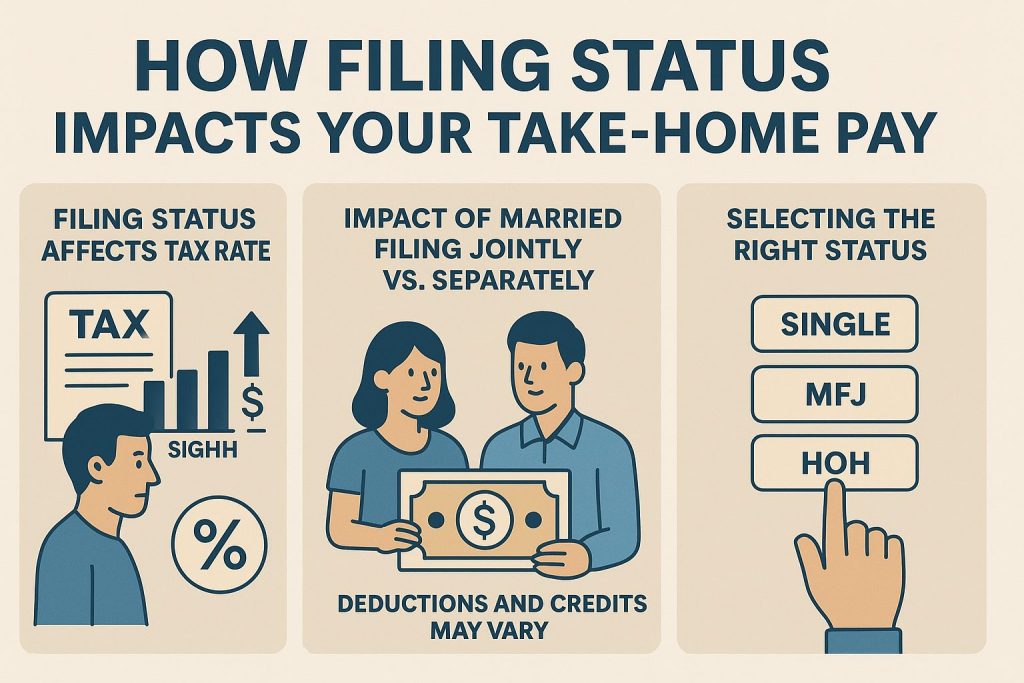
Many factors contribute to your overall financial health, and one of the most significant is your filing status. It determines how much tax you owe and ultimately affects your take-home pay. Choosing the right status can lead to substantial savings, while making the wrong choice could cost you dearly. This post will help you understand how different filing statuses—such as single, married, or head of household—impact your taxes, qualified deductions, and credits, ensuring you make informed decisions that benefit your bottom line.
Key Takeaways:
- Your filing status can significantly influence your tax rate, with different rates applicable for single, married, and head of household filers. This affects your overall tax liability and take-home pay.
- Married couples have the option to file jointly or separately, which can lead to varying tax benefits and deductions, impacting their net income.
- Choosing the right filing status may qualify you for additional credits or deductions, ultimately affecting the amount of money you take home after taxes.
The Mechanics of Filing Status Choices
Your filing status significantly affects various aspects of your tax situation, including your tax rate and eligibility for certain credits and deductions. Understanding the mechanics of how to choose the right filing status can help you optimize your take-home pay. Typically, there are five statuses: Single, Married Filing Jointly, Married Filing Separately, Head of Household, and Qualifying Widow(er). The choice of status is based on your personal circumstances, such as marital status and household situations, impacting overall tax calculations.
How Filing Status is Determined
Filing status is determined by your marital situation as of December 31 of the tax year. If you are single or not married, you will likely file as Single. Married couples can choose to file jointly or separately, depending on their financial circumstances. If you’re a single parent who provides more than half of the household support for a dependent, you might qualify for Head of Household status, which usually comes with favorable tax benefits.
Key Tax Benefits Associated with Each Status
Each filing status comes with distinct tax benefits. For instance, those filing as Married Filing Jointly enjoy higher income thresholds for tax brackets and a higher standard deduction. The Head of Household status provides a larger standard deduction and a lower tax rate compared to Single filers, rewarding those taking care of dependents. Conversely, Married Filing Separately often leads to higher tax rates and limits on certain credits, making it less favorable.
Consider the specific tax implications based on your situation. Filing as Married Filing Jointly, for example, typically enables you to benefit from a significantly higher standard deduction of $27,700 for 2023, as opposed to just $13,850 for Single filers. Additionally, while Head of Household filers benefit from lower tax rates and favorable child tax credits, Married Filing Separately often means forgoing various tax breaks, including the Earned Income Tax Credit. Evaluating these benefits can result in substantial differences in your take-home pay and tax refund.
The Direct Impact on Tax Rates and Brackets
Understanding Progressive Taxation
In a progressive tax system, your tax rate increases as your income rises. Each income bracket has a corresponding tax rate, meaning you may only pay the higher rate on the income earned above a specific threshold. For instance, if you fall into the 22% tax bracket, only your earnings over that bracket threshold are taxed at that rate, while the income below falls under lower rates. This structure allows taxpayers to pay rates proportionate to their income, a critical detail outlined in the Filing status | Internal Revenue Service.
Filing Status as a Vehicle for Increasing or Decreasing Take-Home Pay
Your chosen filing status can significantly influence your overall tax burden, which in turn affects your take-home pay. For example, opting for “Married Filing Jointly” may grant you access to lower tax rates and increased deductions compared to “Married Filing Separately.” Selecting the optimal status can mean paying less in taxes, resulting in a higher monthly income.
Utilizing the right filing status can lead to dramatic differences in your take-home pay. If you’re married and file jointly, you can benefit from the higher income thresholds for tax brackets. Lower rates apply across several brackets, allowing you to retain more of your income. In contrast, if you choose “Single” or “Married Filing Separately,” your tax brackets may be less favorable, leading to a higher tax bill. Therefore, strategically selecting your filing status based on your financial situation can help maximize your after-tax income.
Discover more about joint filing: benefits and to enhance your knowledge.
Deductions and Credits: The Hidden Influencers on Pay
Your total tax liability can also be significantly influenced by the deductions and credits you qualify for, which vary depending on your filing status. The greater your deductions, the lower your taxable income, meaning you take home more of your paycheck. For instance, whether you take the standard deduction or choose to itemize can make a considerable difference in your overall tax bill. Understanding how your filing status interacts with these options is key to maximizing your take-home pay.
How Status Affects Standard vs. Itemized Deductions
Your filing status directly impacts the size of the standard deduction you can claim. For 2023, single filers can expect a deduction of $13,850, while married couples filing jointly can deduct $27,700. If you don’t have enough qualifying expenses to exceed these amounts for itemizing, opting for the standard deduction is typically more beneficial. However, if your itemized deductions surpass the standard amount, your filing status will again play a role in determining whether you should itemize to increase your savings.
The Role of Tax Credits in Different Filing Scenarios
Tax credits can offer substantial savings, but their availability often hinges on your filing status. For example, credits like the Earned Income Tax Credit (EITC) can vary significantly. If you’re married filing jointly, you might be eligible for a larger credit compared to single filers. Similarly, education and child tax credits can differ based on whether you file alone or jointly. The right filing status can elevate your tax refunds, enhancing your disposable income.
Specifically, scenarios involving children can lead to even greater benefits under certain filing statuses. For example, the Child Tax Credit awards up to $2,000 per qualifying child, but your eligibility and phase-out thresholds increase with joint filing as opposed to single filing. Additionally, if you fall into the Head of Household category, you may enjoy better tax rates and a higher standard deduction, potentially entitling you to enhanced credits. This layering of deductions and credits based on your filing status consolidates the importance of choosing the right option when filing your taxes, as it can directly impact your take-home pay.
Discover more about single vs head of to enhance your knowledge.
The Impact of Marital Status on Financial Planning
Your marital status significantly influences financial planning, affecting savings, investments, and overall financial goals. For instance, married couples may benefit from combined incomes, potentially allowing for greater contributions to retirement accounts and shared expenses. This combined financial picture requires careful consideration regarding how changing my filing status affect my paycheck? Additionally, you’ll want to explore tax advantages available to married couples, such as the possibility of lower tax brackets when filing jointly.
Strategic Considerations for Couples in Different Stages
Legal Implications and Benefits of Different Filing Choices
Specifically, if you file as a married couple, lenders will assess your combined incomes, which could diminish your aid prospects compared to a single applicant. For example, a married individual with a spouse earning a higher income may find themselves ineligible for certain grants that could have been available as a single filer. This distinction can significantly alter the financial landscape of pursuing higher education, making it vital to consider your filing status ahead of time.
Explore our filing status guide for how to understand the broader context.
Summary: How Filing Status Impacts Your Take-Home Pay
On the whole, understanding how your filing status affects your take-home pay is vital for effective financial planning. Your filing status determines tax rates, deductions, and credits, all of which can significantly influence your net income. By recognizing the implications of different filing statuses, you can make informed decisions that enhance your financial situation and optimize your tax benefits. Therefore, it’s beneficial to evaluate your options carefully each tax year to ensure you are maximizing your earnings and minimizing your tax liabilities.
FAQ
How does my filing status affect my tax rate?
Your filing status determines which tax brackets apply to your income. The tax code has different brackets for various filing statuses, such as Single, Married Filing Jointly, and Head of Household. For instance, individuals with a Single filing status may face higher tax rates compared to those filing Married Filing Jointly at the same income level. This means the amount of tax you owe can vary significantly based on how you choose to file, influencing your overall take-home pay.
Can my filing status change throughout the year and how can that impact my taxes?
Yes, your filing status can change based on life events such as marriage, divorce, or the birth of a child. For example, if you transition from Single to Married Filing Jointly, you may benefit from lower tax rates and potentially higher deductions. Conversely, filing as Single may lead to higher taxes if you were previously married and shared deductions. Any change in your filing status can directly impact your net pay, making it necessary to review your status regularly, especially with significant life changes.
Are there any deductions or credits that vary based on filing status?
Yes, certain deductions and credits accessible to taxpayers depend on their filing status. For example, the Child Tax Credit is more beneficial for those filing as Head of Household, which allows for a larger credit compared to those filing as Single. Additionally, the standard deduction amount varies; for the tax year 2023, Married Filing Jointly filers receive a higher standard deduction than Single filers. These differences mean that your choice of filing status can significantly affect your taxable income and, subsequently, your take-home pay.